Blogs
Thinning Hair? How PRP Hair Restoration Helps with Hormone-Related Hair Loss
Hair thinning is one of the most common concerns among adults, affecting both men and women at various stages of life. While genetics often play a role, hormones influence hair growth just as strongly. As hormone levels fluctuate with age, stress, medical conditions, or lifestyle factors, many people begin noticing increased shedding, reduced volume, or changes in hair texture.
At Every Body Health and Wellness in Northglenn, Colorado, patients struggling with hormone-related hair thinning have a powerful, natural option: PRP hair restoration. This regenerative treatment uses your body’s own platelet-rich plasma to stimulate stronger, healthier hair growth without surgery or extended downtime.
If you’ve noticed your hair becoming thinner, shedding more easily, or losing fullness, this guide explains how hormones impact hair—and how PRP can help restore confidence from the scalp outward.
How Hormones Influence Hair Growth
Hormones play a crucial role in the hair growth cycle. When levels become imbalanced, they can disrupt hair follicles and shorten the growth phase, leading to thinning hair or decreased density.
Common hormonal triggers for hair loss include:
• Perimenopause and menopause
• Postpartum hormone shifts
• Low estrogen or progesterone
• Low or high testosterone
• Thyroid imbalances
• Elevated cortisol from chronic stress
• Insulin resistance or metabolic changes
In women, declining estrogen and progesterone allow androgens (male hormones) to have a stronger influence on the hair follicles, causing thinning or increased shedding. In men, changes in testosterone and DHT (dihydrotestosterone) can shrink follicles and slow growth.
Because hormones influence both the volume and thickness of hair, rebalancing them—combined with targeted treatments like PRP—can significantly improve regrowth and scalp health.
What PRP Hair Restoration Is and How It Works
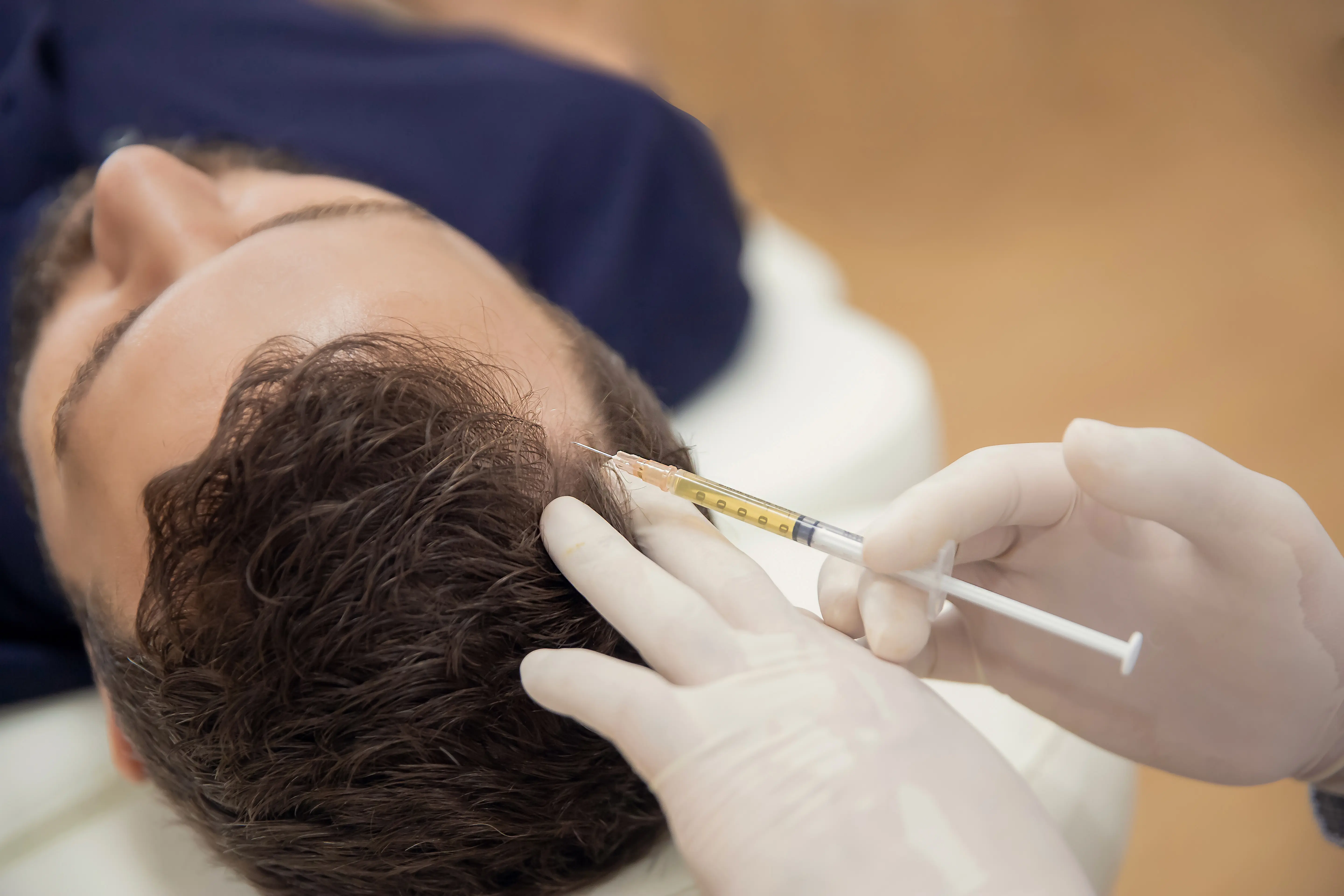
PRP, or platelet-rich plasma, is derived from a small sample of your own blood. After being spun in a centrifuge, the plasma is concentrated with growth factors and natural healing proteins. When this plasma is injected into areas of thinning hair, it stimulates follicle repair and promotes healthier, stronger hair growth.
PRP works by:
• Increasing blood supply to the follicles
• Extending the hair growth phase
• Strengthening existing hair
• Thickening hair shafts
• Awakening dormant follicles
• Reducing shedding
Because PRP uses your own plasma, the treatment is safe, biocompatible, and free of synthetic chemicals or medications.
Why PRP Is Ideal for Hormone-Related Hair Loss
Hormone shifts often weaken hair follicles gradually. PRP targets this root cause by providing regenerative support directly to the follicles. Unlike topical products that sit on the surface, PRP works inside the follicle to build strength and resilience.
PRP is especially beneficial for:
• Early thinning
• Widening part lines
• Overall volume loss
• Shedding caused by hormone fluctuations
• Postpartum or perimenopausal hair changes
• Androgen-related thinning
For individuals with hormonal imbalances, pairing PRP with hormone evaluation or replacement therapy can produce even greater improvements.
What to Expect During PRP Hair Restoration
A typical PRP session takes 45 to 60 minutes. Here’s how it works:
- A small blood sample is drawn.
- The sample is placed in a centrifuge to isolate the PRP.
- The concentrated PRP is injected into targeted areas of the scalp.
- Mild scalp stimulation may be used to enhance absorption.
A topical numbing agent may be applied to keep you comfortable. Most patients describe the feeling as mild pressure or small pinches.
There is no significant downtime, and you can return to normal activities right after your appointment.
How Many Sessions You’ll Need
PRP for hair restoration works gradually as new growth cycles occur. Most patients benefit from a series of treatments:
• 3 sessions spaced 4–6 weeks apart for initial results
• Maintenance sessions every 6–12 months
Noticeable improvements typically begin around 8 to 12 weeks after the first treatment, with continued gains over the following months.
Results: What You Can Expect
PRP can yield impressive improvements, especially when hormonal imbalances are addressed at the same time. Patients often experience:
• Reduced shedding
• Thicker individual hairs
• Increased volume and density
• Healthier scalp and follicles
• Fuller hairline
• Enhanced overall hair quality
Results vary from person to person, but PRP is particularly effective for early to moderate thinning.
Combining PRP With Hormone Optimization
Because hormones influence hair health so strongly, a comprehensive approach often produces the best results. At Every Body Health and Wellness, your provider may recommend:
• Thyroid testing
• Estrogen and progesterone evaluation
• Testosterone or DHT analysis
• Cortisol or stress-hormone testing
• Nutrient evaluation for vitamin D, iron, or B12
Addressing internal hormonal imbalances while providing PRP externally creates an ideal environment for stronger, healthier hair growth.
Who Is a Good Candidate for PRP Hair Restoration?
PRP is well-suited for adults who have:
• Hormone-related thinning
• Early genetic hair loss
• Decreased hair volume
• Postpartum shedding
• Stress-induced hair changes
• Weak or fragile hair strands
Individuals with more advanced hair loss may still see improvements but may benefit from combining PRP with additional therapies.
Restore Fuller, Healthier Hair in Northglenn, CO
If you’re experiencing thinning hair or hormone-related hair loss, Every Body Health and Wellness in Northglenn, CO offers PRP hair restoration designed to strengthen follicles and support natural regrowth. Schedule your consultation today to learn how PRP and hormone optimization can help you regain confidence and achieve fuller, healthier hair.
Read More Blogs!
Stay updated with the latest blog posts and engage with our community.